

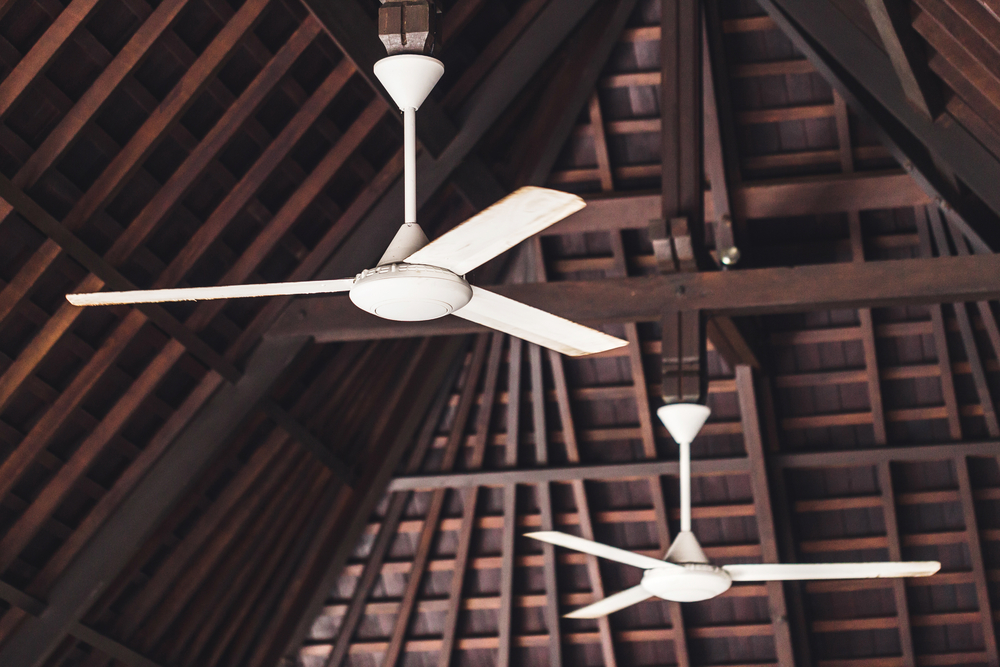
Air inside homes often creates confusion between real temperature reduction and comfort change. Many ask: Do ceiling fans lower the temperature? Many assume spinning blades reduce a room’s heat level. Reality works differently. Cooling systems remove heat from the indoor air mass. Fans move air across the skin surface, changing how heat is felt without changing the thermometer reading.
This difference matters during high heat days. Misreading airflow behavior often leads to higher energy use and weaker comfort control. Once airflow behavior becomes clear, cooling decisions become sharper, more stable, and more effective inside living spaces.
1. Airflow direction during summer use
Fan rotation controls how air behaves inside a room. During warm months, counterclockwise motion pushes air downward in a focused stream. This increases direct contact between moving air and the skin, which improves evaporation from sweat.
When discussing ceiling fan direction for summer, this setup becomes essential for comfort control. Incorrect rotation reduces airflow impact and creates weak circulation zones near corners, ceilings, and seating areas.
Even at higher speeds, the wrong direction weakens the cooling sensation. Correct setup spreads air evenly across the room and improves comfort during long heat exposure hours. A small adjustment in direction often produces stronger results than increasing fan speed alone.
2. Cooling sensation created by moving air
Air movement changes how heat is felt inside indoor spaces. Skin normally holds a warm boundary layer of air. When the air remains still, that heat builds up around the body surface.
This is where the wind chill effect in home conditions becomes noticeable. Moving air removes that warm layer and increases the sweat evaporation rate. The result is a cooler feeling even when the actual room temperature does not change.
Humidity strengthens this effect. When the air holds more moisture, natural cooling slows down. Air movement restores balance by continuously breaking stagnant air around the body. That is why airflow feels stronger in humid conditions compared to dry environments.
3. Reducing energy use through airflow support
Cooling systems and fans work best when used together. AC units reduce heat inside the room, while fans distribute that cooled air across the entire space.
A common benefit is lowering the AC bill with fans. Instead of lowering thermostat settings repeatedly, airflow spreads conditioned air evenly across all zones of a room. That reduces compressor strain and prevents long cooling cycles.
Fans also prevent uneven temperature pockets. Without airflow, some areas become too cold while others remain warm. That imbalance leads to frequent thermostat changes. Air circulation balances this difference and improves overall system efficiency over time. This combined use helps maintain comfort while reducing unnecessary energy consumption during long, hot periods.
4. Practical cooling habits for hot conditions
Comfort during hot months depends on multiple factors working together. Airflow alone cannot handle everything, but it plays a major role in daily comfort. The best way to stay cool in summer involves airflow control, hydration habits, window shading, and clothing selection. Each factor reduces body heat load in a different way.
Ceiling fans improve evaporation speed from skin by increasing air movement. When used with shaded windows, indoor heat buildup reduces significantly. That allows airflow to circulate cooler base air instead of pushing hot stagnant air.
Fan placement near activity zones also matters. Direct airflow exposure increases comfort during sitting, working, or resting hours. Light clothing further improves airflow efficiency by allowing heat release without trapping warm layers near the skin. Each small adjustment adds up to stronger comfort and stability inside living spaces.
5. Understanding what fans actually change
Ceiling fans do not reduce room temperature. They change how temperature feels. AC systems remove heat from air, while fans only move air across surfaces.
Fans use low energy and improve air circulation across the room. AC systems use higher energy and change the actual thermal conditions inside the space.
When both systems are used together, indoor comfort becomes more stable. AC handles temperature reduction, while fans handle air movement and distribution. Most discomfort inside rooms comes from uneven airflow rather than weak cooling capacity. Fans solve that imbalance by keeping air in motion across the entire space, reducing stagnant zones and improving consistency.
Air movement inside rooms changes comfort without changing actual temperature readings. Ceiling fans work through motion, not cooling cycles. AC systems remove heat from the air, while fans distribute airflow across the skin and space. Together, they create balanced indoor comfort during high heat conditions. Direction, placement, and speed influence the final experience more than most people realize. Small adjustments often lead to noticeable improvements in daily comfort. Understanding airflow behavior helps reduce energy strain while improving indoor living conditions across changing temperatures without unnecessary system overload or constant thermostat changes.
“Indoor heat does not need constant strain on cooling systems. Dunlap A/C and Heating focuses on airflow balance that supports steady comfort during intense heat conditions. Call our pros now at 813-323-2899 and improve indoor comfort with airflow solutions designed for real daily cooling needs.”
FAQs
1. How does fan usage affect comfort in Lakeland, FL homes?
In Lakeland, FL, homes, steady airflow improves body cooling response during humid heat conditions, making indoor spaces feel more comfortable without changing actual temperature readings inside the rooms.
2. What fan setup works well in Riverview, FL, summer heat?
In Riverview, FL, rooms, counterclockwise airflow helps improve circulation, allowing body heat to release faster during high temperature hours across daily use.
3. Can fans support cooling in Brandon, FL, apartments?
Yes, in Brandon, FL, apartments, air circulation improves distribution from cooling systems, reducing uneven warm and cool zones across indoor spaces and improving comfort balance.