

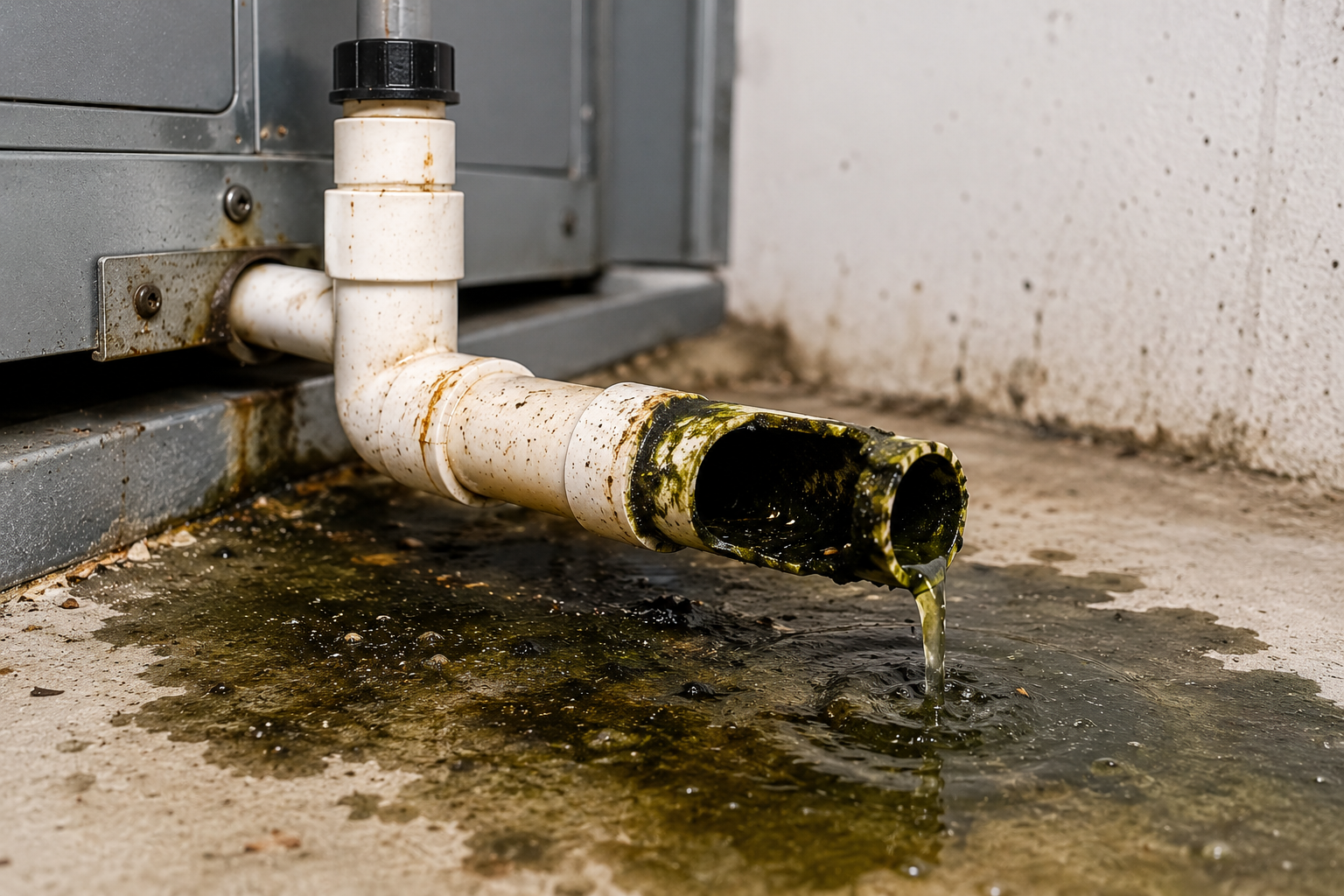
It starts so quietly that you’d never even notice, just a little water slowly gathering in a pan tucked away in your attic or a closet, drip by patient drip, until one day it finally spills over and you’ve got a ceiling stain spreading out like a slow bruise. An AC condensate drain line clog sounds like such a minor nuisance, and yet it’s quietly behind some of the most expensive water damage homeowners ever face, because that one little blockage can flood a whole space before anyone even realizes the AC is the real culprit. Your system constantly pulls moisture from the humid air and routes all of it outside through one narrow pipe. Block up that one single pipe, and the water backs right up into your house fast. Most folks honestly don’t even know that hidden line exists at all until the day it finally fails on them. So let’s make absolutely sure yours never once catches you off guard this season.
The Slow Drip That Turns Into a Real Disaster
What makes a hidden drain clog so genuinely dangerous is just how sneaky and patient the whole thing is. The water doesn’t dramatically gush out; it quietly seeps, soaking deep into drywall, subflooring, and insulation where you simply can’t see it for days or even weeks. By the time an ugly stain finally appears on your ceiling, mold has very often already taken firm hold in the damp, dark spaces hiding behind it. That trapped hidden moisture can warp wood, ruin good flooring, and even start to threaten nearby electrical components. A small, harmless-looking clog you ignore for just one week can very easily snowball into a repair bill with several zeros on the end of it.
First Moves the Moment You Spot Trouble
Catch it nice and early, and you can often handle the basics yourself before it ever spirals out of control. The very first sign is usually standing water sitting in the pan or a damp patch spreading near the indoor unit, so kill the power the instant you see it. Tackling unclogging AC drain line pan issues usually means attaching a wet/dry vacuum to the drain’s outdoor exit and physically pulling the whole blockage out with steady suction. A good follow-up flush of vinegar or warm water then helps wash away whatever stubborn slime is still clinging on inside there. If the suction does absolutely nothing and the water just keeps rising anyway, the clog is sitting deeper than any DIY fix can really reach.
Why Your AC Suddenly Shut Itself Right Off
If your whole system went stone dead on a brutally hot day for no clear reason at all, please don’t just assume the absolute worst quite yet. A whole lot of modern units now include a clever little safety device that kills the system the very moment water rises too high in the pan. So a float switch cutting off AC operation is very often a genuinely helpful feature, not a failure, since it’s literally stopping a flood before it can even start. The big mistake people tend to make is overriding it or just repeatedly flipping the breaker without ever once clearing the real clog underneath. Respect that shutoff, hunt down the actual blockage, and the system usually comes right back on its own once the water finally drains away.
Building a Simple Habit That Saves Your Floors
The real secret here, honestly, isn’t fixing clogs at all; it’s making absolutely sure they barely ever form in the first place. A simple monthly splash of distilled vinegar down the access port during the long cooling season keeps that algae from ever really colonizing the line. Honestly, preventing water damage in Plant City, Florida, really comes down to that one small routine plus an annual tune-up where a pro clears, inspects, and tests the entire drainage setup. Swapping out your air filter regularly matters a lot here too, since a starved, frozen coil can thaw and completely overwhelm the drain all at once. Ten quiet minutes a month easily beats a whole weekend tearing out ruined baseboards and soggy carpet every single time.
The Line Between a Quick Fix and a Real Repair
Knowing your honest limits with all of this stuff saves you both real money and a lot of stress. A simple surface clog you can suck out and flush in twenty quick minutes is a perfectly reasonable do-it-yourself win. But once you’re dealing with a cracked pan, a clog that laughs right at your vacuum, a float switch that keeps tripping, or visible water damage, you’ve clearly crossed into pro territory. A trained technician brings the right tools to clear a deep blockage, the trained eye to spot hidden damage, and the know-how to confirm the system actually drains correctly afterward. With standing water sitting that close to live electrical wiring, calling someone in isn’t ever really giving up; it’s honestly just the smart, safe move.
For something so genuinely small, a blocked condensate line carries a shocking amount of destructive potential, but it’s also honestly one of the most avoidable problems in your entire home. Learn the early warning signs, trust that float switch the moment it trips, run a quick monthly flush, and the odds of ever mopping up a real flood drop to almost nothing at all. And when a stubborn clog digs in far too deep for any shop vacuum, a real pro settles the whole thing fast before the water ever wins. That’s the steady, honest, no-gimmick standard Dunlap’s A/C and Heating has proudly held since 2009, with Goodman-certified techs carrying more than two full decades of hands-on experience into Plant City homes. As your locally owned neighbors who genuinely treat your house like their own, they’re the easy call to make the very moment water shows up somewhere it really shouldn’t.
“Caught a drip from your AC? Stop it before it floods. Call Dunlap’s A/C and Heating at 813-323-2899 for fast, honest drain line help today.”
FAQs
Q1: What causes an AC drain line to clog in Plant City, Florida?
In Plant City, Florida, the humid climate lets algae, mold, and slime build up inside the dark, damp condensate line until it blocks the flow. Dust and debris add to it. Once blocked, water backs up into the pan and can overflow, which is why regular flushing matters so much here.
Q2: How do I know if my AC drain line is clogged in Plant City, Florida?
For homeowners in Plant City, Florida, common signs are water pooling near the indoor unit, a musty smell, a full drain pan, or the system shutting off from the float switch. Reduced cooling can show up too. Catching any of these early lets you clear it before water damage spreads.
Q3: Can a clogged AC drain line cause water damage in Plant City, Florida?
Around Plant City, Florida, yes, an overflowing line can soak drywall, flooring, and insulation, and the trapped moisture often leads to mold. Damage can spread for days before you notice a stain. Prompt clearing, a working float switch, and routine maintenance are the best ways to prevent it.